
Erractics
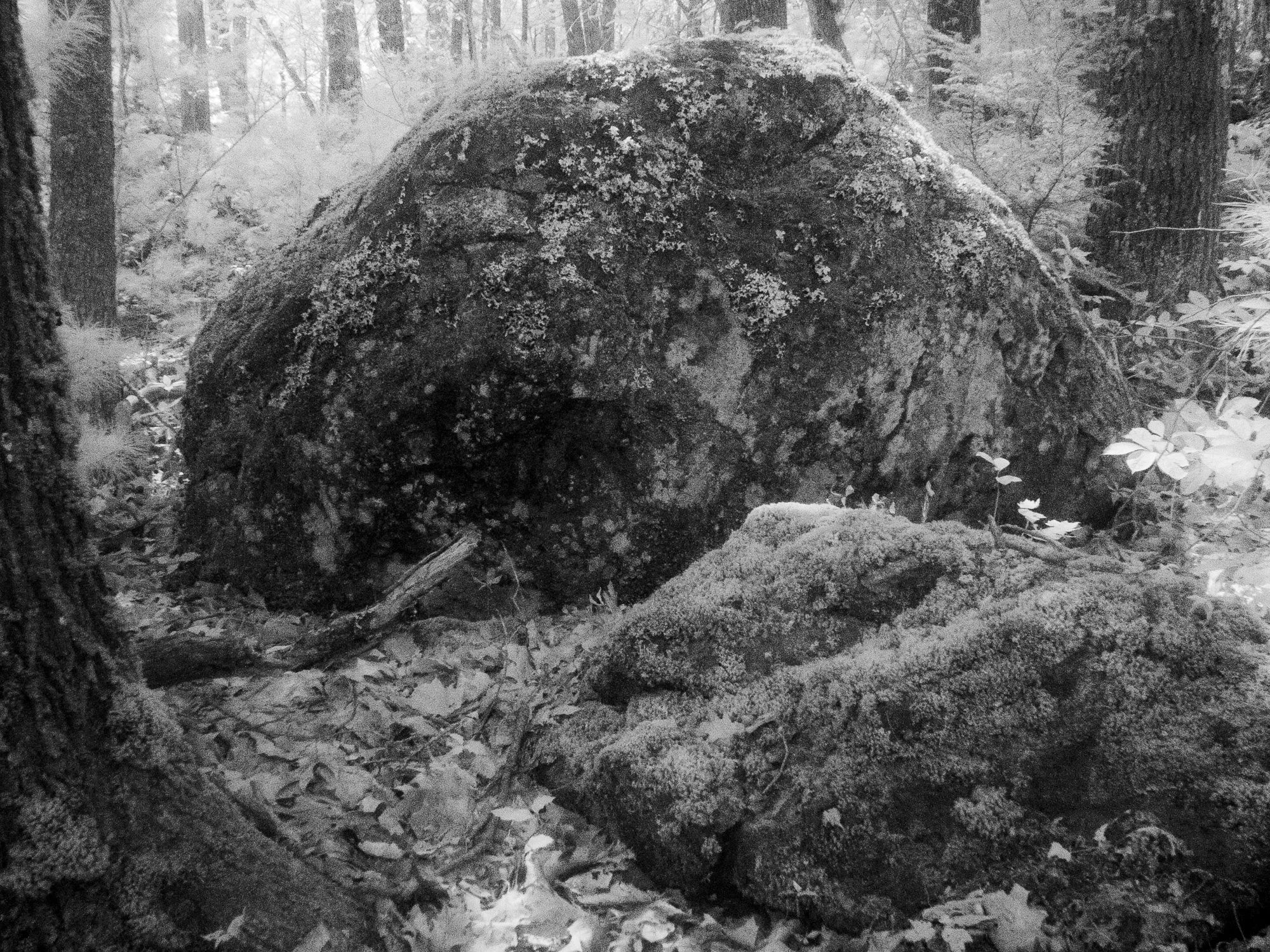
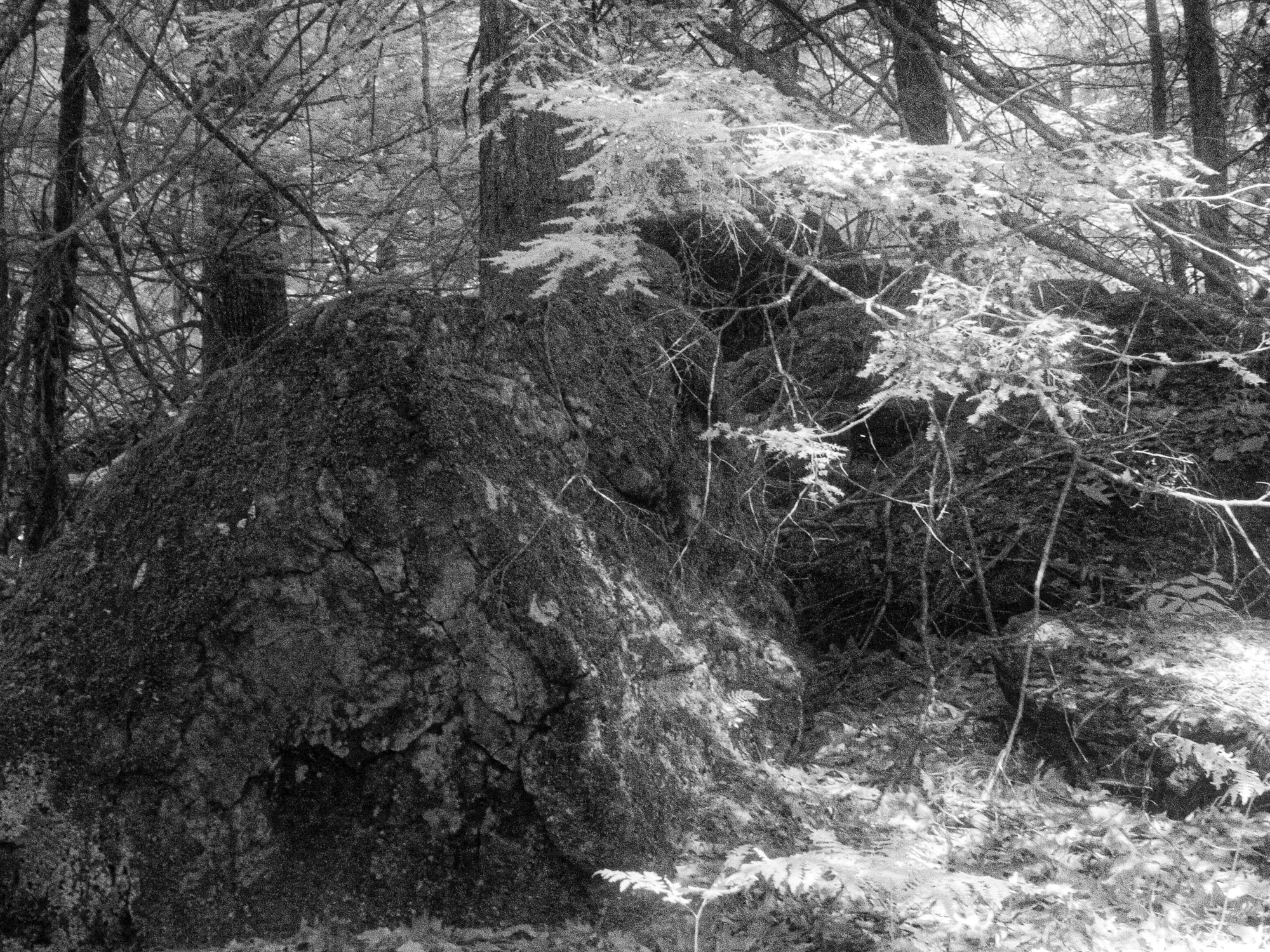
When hiking in Maine, it is hard to miss the glacial erratics, massive rocks transported by glaciers and deposited in the landscape. The Laurentide Ice Sheet was a moving, grinding force that shaped nearly every hill, valley, and island in Maine. And when it finally melted away roughly 14,000 years ago, it left behind boulders perched in improbable places, far from the bedrock they came from.
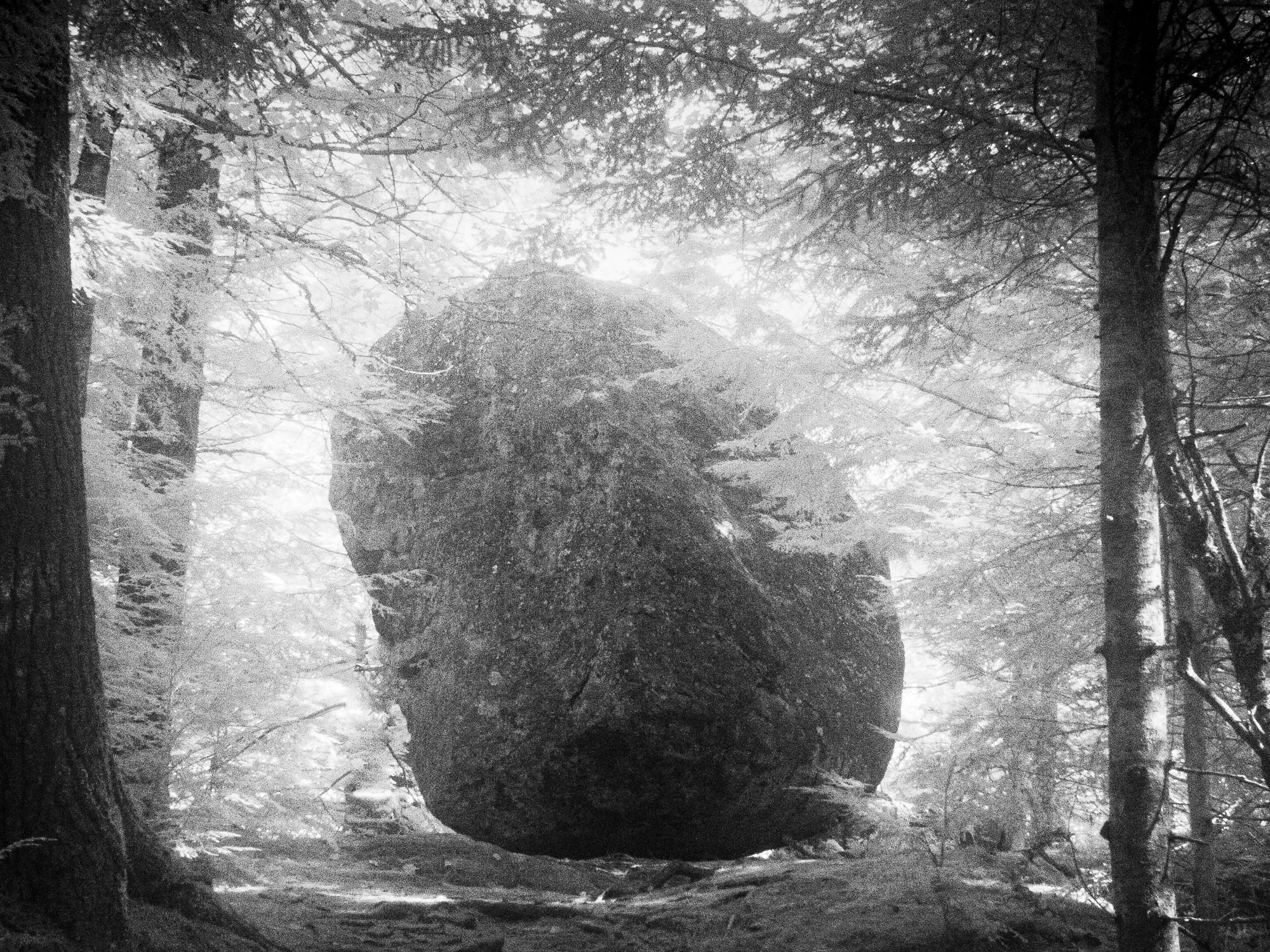
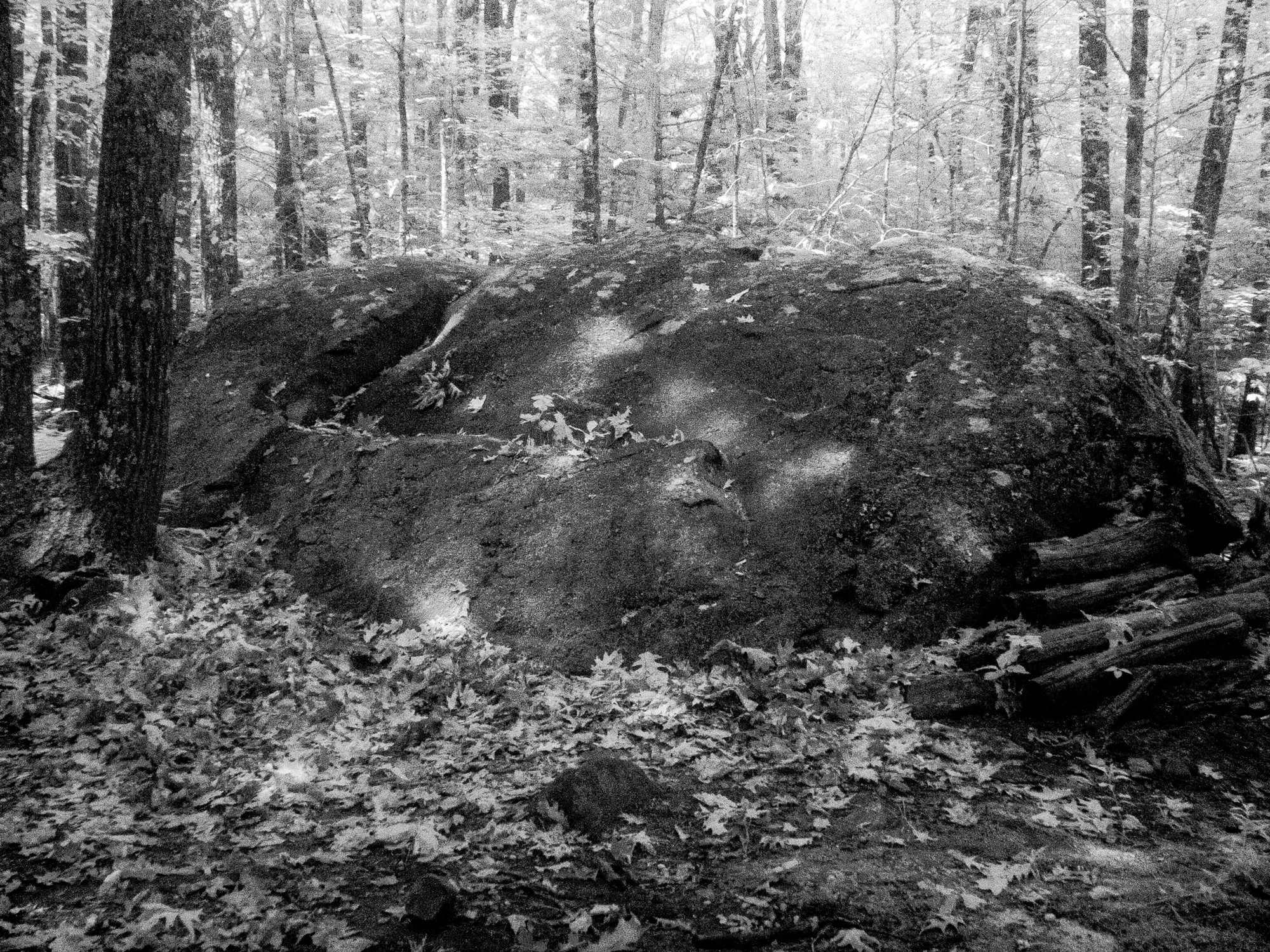
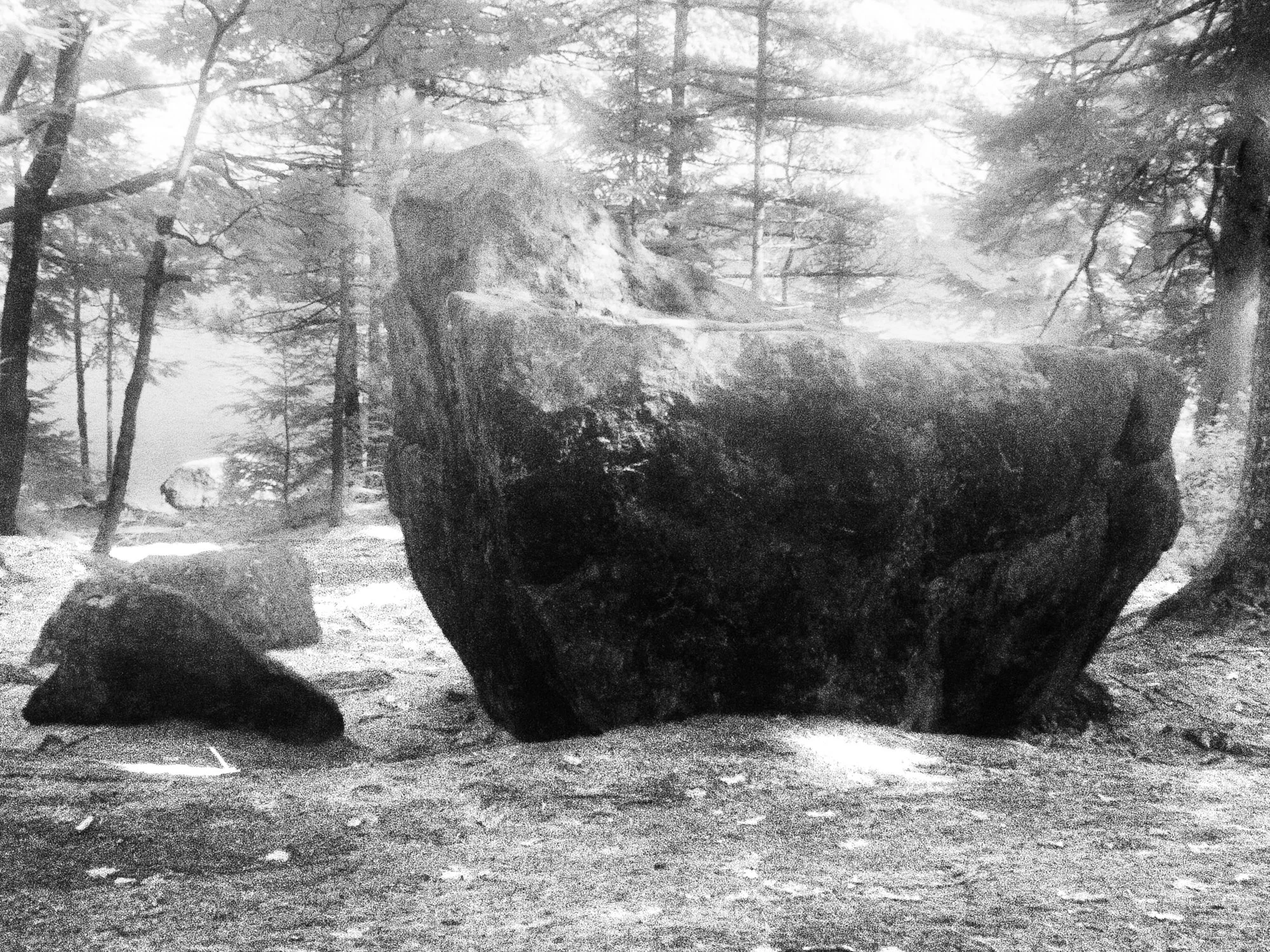
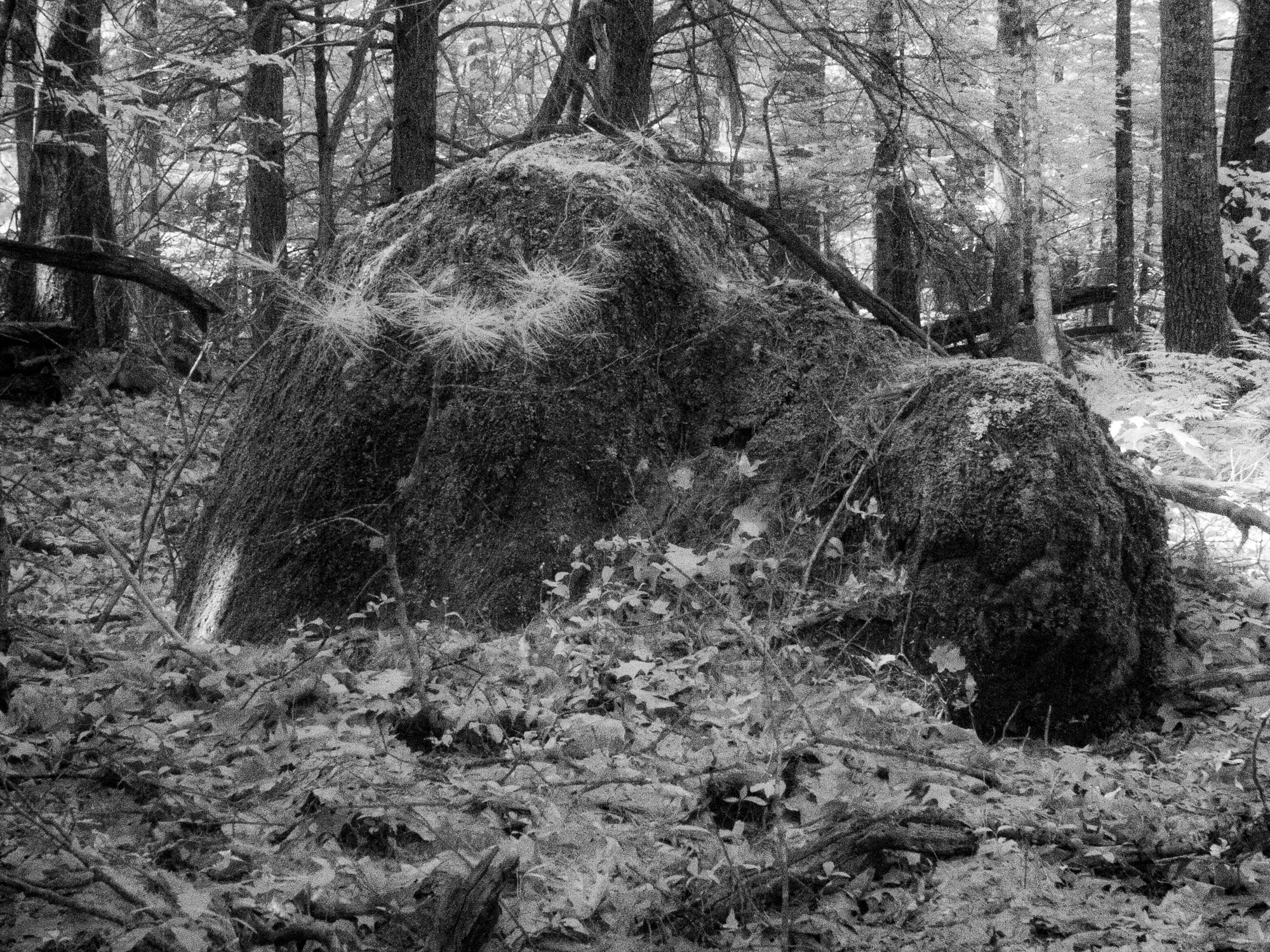
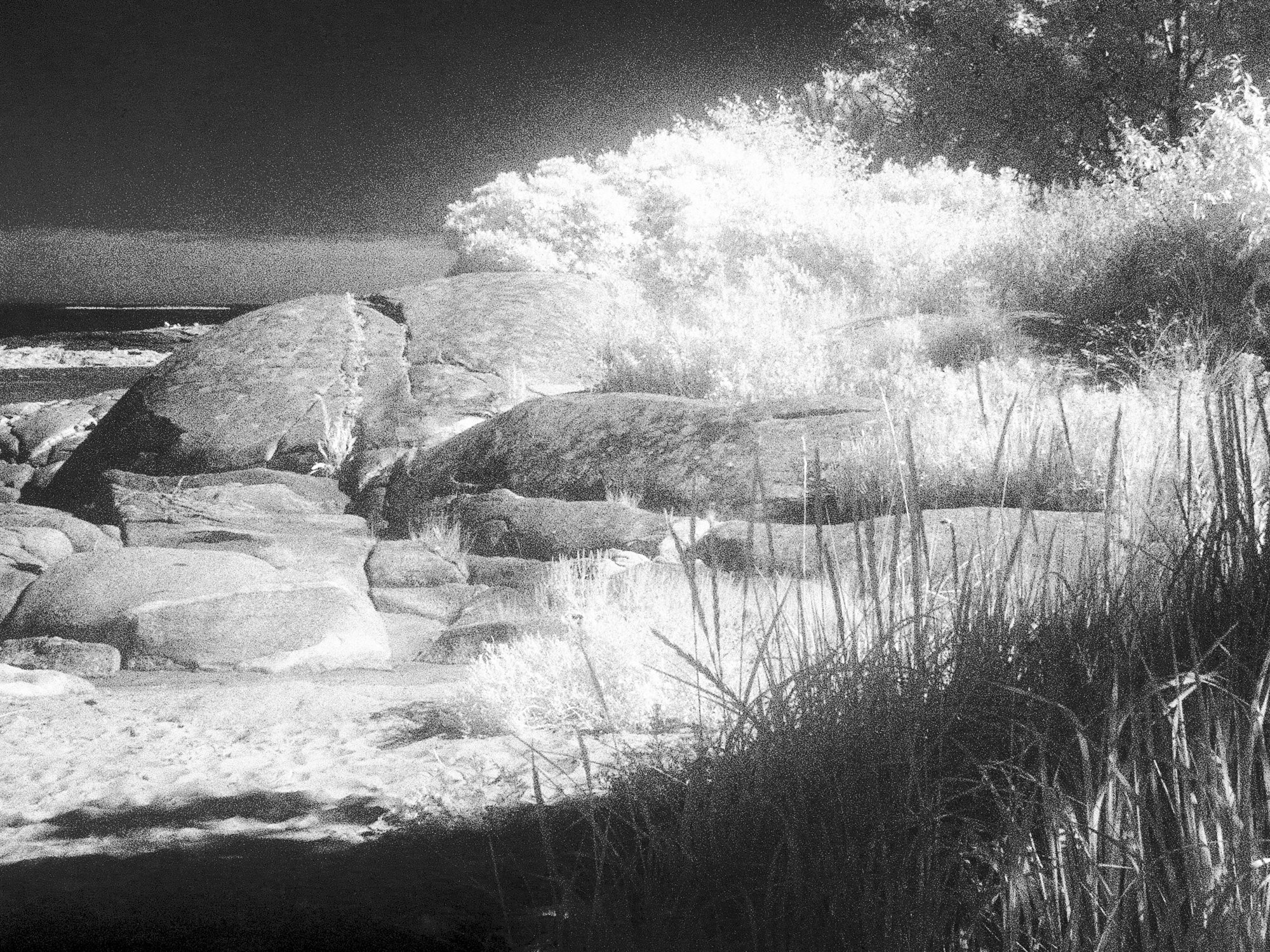
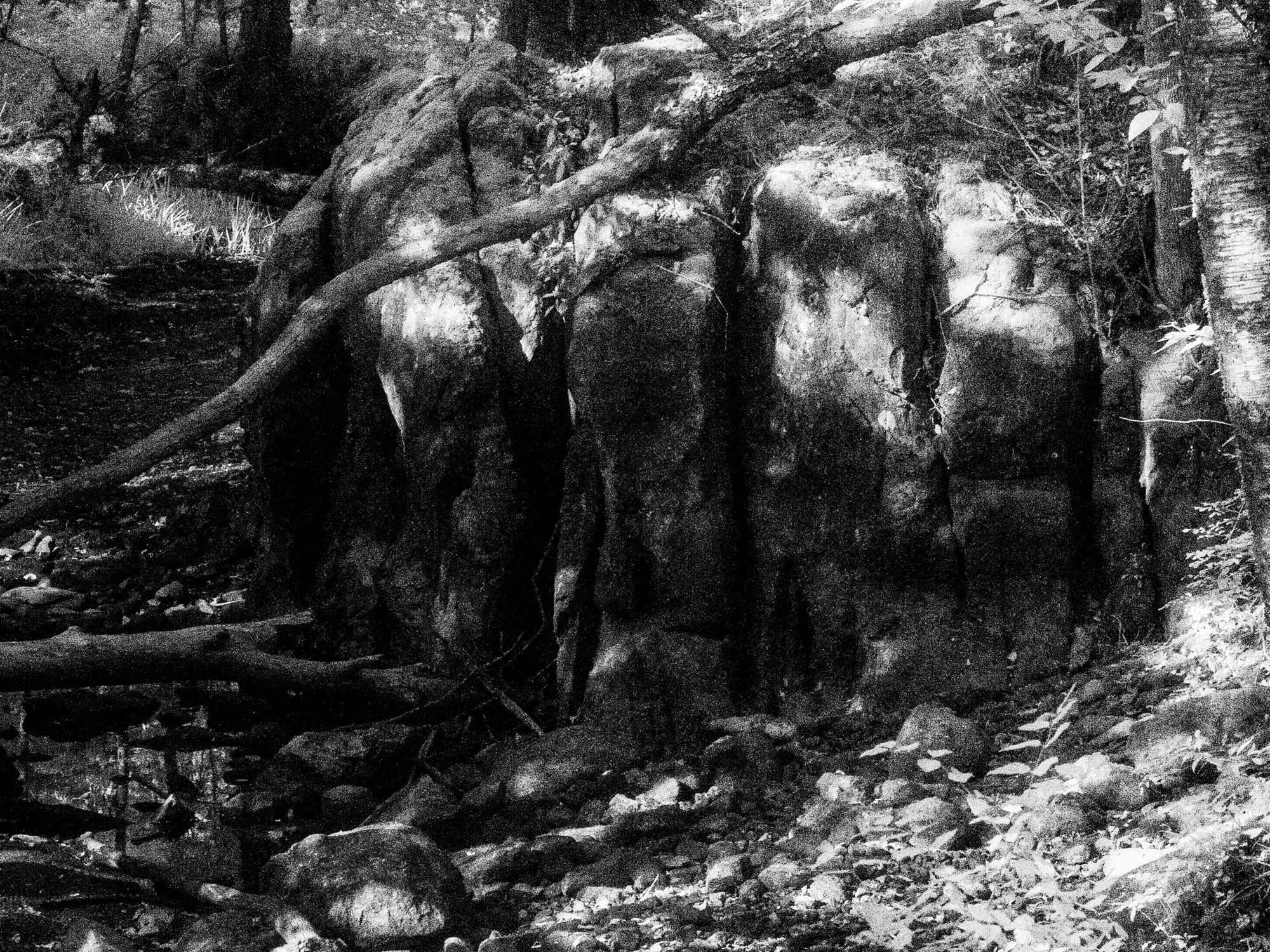
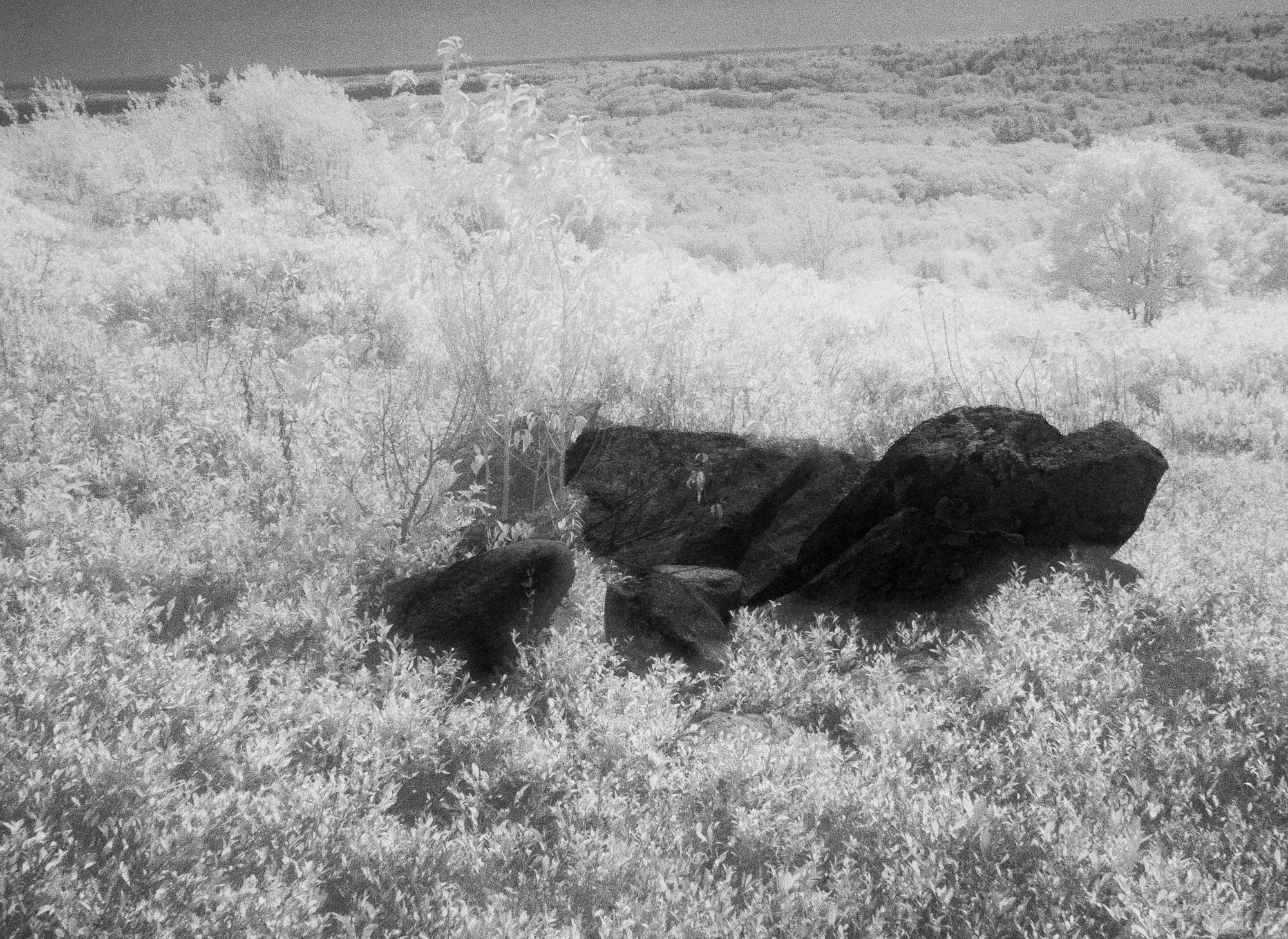
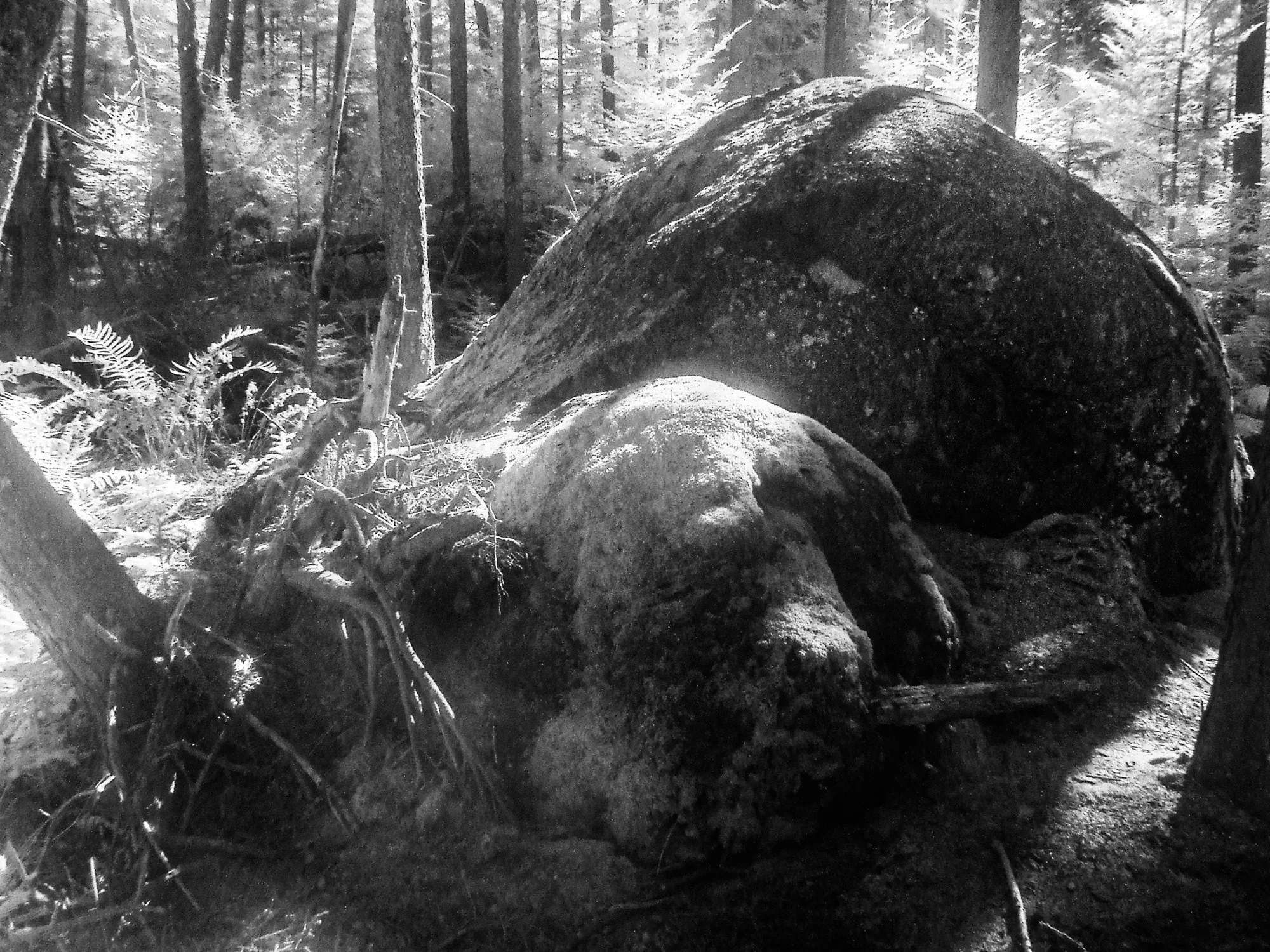
When I photographed them with my phone, they appeared as ordinary rocks. I put some new batteries into a circa 2005 camera that had been converted to infrared and carried it on my hikes. Infrared photography operates in the invisible spectrum, revealing things the human eye cannot perceive. The images, when downloaded, are shades of pink. I converted them to black and white in Lightroom, and the ordinary rocks became ethereal, mysterious wonders.
The Druids believed that standing stones were living beings with consciousness. Enter with respect. Walk clockwise around them to let them greet you.
If you see faces in some of these images, it is a common psychological phenomenon called pareidolia, in which the brain imposes familiar patterns, especially faces, onto amorphous or random visual data, leading to the perception of a recognized image where none truly exists.
They are mimetoliths – a pattern created on a rock that may come to mimic a recognizable form – like a face – through the random process of erosion or weathering.
This project will be on display at the Rockport Public Library in September 2026.
